

Concerns like pigmentation, sun damage, early fine lines, and uneven skin texture are common, especially in environments with frequent sun exposure. In medical aesthetics, skin resurfacing treatment is often recommended to support gradual skin renewal and improve overall clarity without being overly aggressive.
At Anna Hoo Clinic, MultiFrax treatment is offered as a non-invasive, doctor-guided option for individuals exploring pigmentation treatment and skin texture concerns. As a MultiFrax laser treatment, it is approached with careful assessment and personalised planning, recognising that uneven skin tone and textural changes can vary between individuals.
Table of Contents
What Is MultiFrax Treatment?
MultiFrax treatment is a non-ablative fractional laser used to support skin resurfacing treatment for concerns such as pigmentation, uneven texture, and early signs of ageing. It works by delivering controlled heat into targeted areas of the skin while keeping the surface layer intact.
As a MultiFrax laser treatment, it is designed for gradual skin improvement rather than aggressive resurfacing. Treatment settings are doctor-assessed and adjusted based on individual skin condition and concerns, rather than applied using a fixed protocol.
How Does MultiFrax Laser Treatment Work?
To understand how does MultiFrax treatment work, it helps to look at how targeted heat affects the skin beneath the surface. The laser delivers thermal energy into specific zones, triggering collagen production and supporting the renewal of damaged skin structures.
Because this is a non-ablative fractional laser, only selected areas are treated at a time while surrounding skin remains intact. This fractional delivery supports a smoother recovery process and allows skin changes to develop progressively.
Understanding the Dual Wavelength Technology (1550nm and 1927nm Laser)
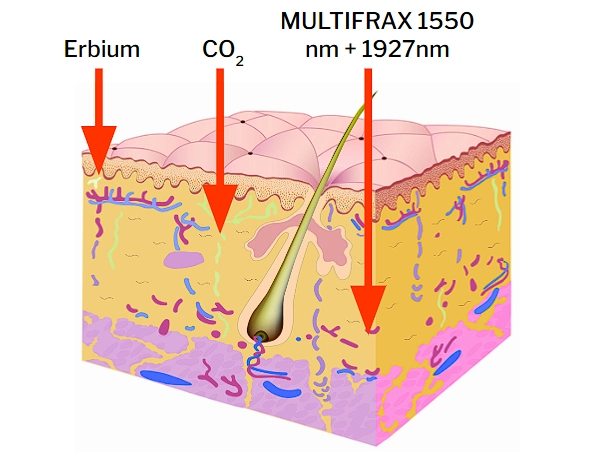
MultiFrax uses two laser wavelengths to address different layers of the skin in a single treatment approach.
- 1550nm wavelength: Targets deeper skin layers, where it supports improvement in pigmentation, acne scars, fine lines, and wrinkles through collagen stimulation.
- 1927nm wavelength: Focuses on the surface layers of the skin and is commonly used in pigmentation treatment for concerns such as sun damage and melasma.
By combining the 1550nm and 1927nm laser wavelengths, MultiFrax allows doctors to address both surface pigmentation and deeper textural concerns in a coordinated way. This dual-wavelength design supports multi-layer skin resurfacing while maintaining a controlled and medically guided treatment process.
What Skin Concerns Can MultiFrax Help With?

MultiFrax is commonly explored for skin concerns related to pigmentation, texture irregularities, and early signs of ageing. Because it targets different skin depths, its role is often to support gradual improvement rather than deliver immediate or corrective outcomes.
Pigmentation and Uneven Skin Tone
Concerns such as sun damage, discoloration, and dullness are often linked to uneven pigment distribution in the skin. As a pigmentation treatment, MultiFrax may help reduce the appearance of dark patches and support a more even skin tone over time, while also contributing to smoother skin texture without removing pigment directly.
Melasma (Individual Results May Vary)
Melasma is a complex condition influenced by hormonal factors and sun exposure, and responses to treatment can vary between individuals. MultiFrax treatment for melasma typically focuses on surface pigmentation using the 1927nm wavelength, with outcomes dependent on careful medical assessment and ongoing skin management.
Acne Scars and Uneven Skin Texture
Acne scars often affect skin texture rather than colour alone, especially when deeper layers have been involved. MultiFrax may support gradual improvement in acne scars by encouraging cellular renewal beneath the surface, which can help uneven skin texture appear smoother over time.
Fine Lines and Wrinkles
Fine lines and wrinkles are commonly associated with early collagen loss and cumulative environmental stress. Through targeted heat stimulation, MultiFrax may support collagen production, which can help soften fine lines and wrinkles gradually, particularly in early ageing concerns.
Stretch Marks
Stretch marks develop when the skin’s underlying structure is altered by rapid stretching. In selected cases, MultiFrax may be used to support texture improvement by stimulating collagen activity in deeper skin layers, with results depending on factors such as skin type and stretch mark maturity.
Benefits of MultiFrax Laser Treatment

Minimal Downtime
One of the commonly cited benefits of MultiFrax is its minimal downtime. Most individuals are able to resume daily activities shortly after the procedure, which makes it a practical option for those who prefer treatments with limited disruption to routine.
Comfortable Treatment Experience
MultiFrax is generally described as a gentle treatment. During the session, most patients report feeling mild warmth rather than significant discomfort, which aligns with its non-invasive, non-ablative approach.
Comprehensive Skin Treatment
Because MultiFrax targets different layers of the skin, it can be used to address a range of concerns within a single treatment plan. This includes pigmentation-related issues, uneven skin texture, and early fine lines, allowing doctors to take a more holistic skin resurfacing approach.
Collagen Stimulation
The laser energy used in MultiFrax encourages the skin’s natural collagen production. Over time, this collagen response supports improvements in skin firmness and texture, contributing to gradual and controlled skin resurfacing.
What Is the Downtime for MultiFrax Treatment?
One of the most common questions is what is the downtime for MultiFrax treatment, especially for those balancing treatment with work or daily routines. In general, MultiFrax treatment downtime is considered minimal, which means most people are able to return to normal activities shortly after their session.
Some temporary skin responses may occur, such as mild redness or a warm sensation in the treated area. These effects are usually short-lived and tend to settle as the skin recovers.
Aftercare is typically straightforward and focuses on protecting the skin while it heals. This includes avoiding excessive sun exposure and using sunscreen, which helps support recovery and manage MultiFrax treatment downtime effectively.
What Can You Expect During and After a MultiFrax Session?

MultiFrax treatment session time can vary depending on the size of the treatment area and the skin concerns being addressed. Before the session, the doctor will assess the skin and determine the appropriate treatment coverage.
During the procedure, most individuals describe the sensation as mild warmth rather than pain. This experience is consistent with a non-ablative fractional laser approach, which is designed to work beneath the surface while maintaining comfort.
After the session, visible changes do not happen overnight. Improvements develop gradually over time, as the skin responds to treatment and renewal processes continue following each MultiFrax treatment session time.
Who May Be Suitable for MultiFrax Laser Treatment?
MultiFrax treatment may be considered for individuals who are managing concerns such as:
- Pigmentation issues related to sun exposure or uneven tone
- Uneven skin texture, including early textural changes
- Early signs of ageing, such as fine lines
It is often explored by those looking for a non-invasive laser treatment that supports gradual skin improvement rather than aggressive resurfacing.
Suitability for MultiFrax treatment is determined through doctor-led assessment rather than self-selection. A personalised consultation helps ensure the treatment approach aligns with individual skin condition, concerns, and expectations.
Is MultiFrax Laser Treatment Available in Malaysia?
MultiFrax laser treatment is available in Malaysia as part of medically supervised aesthetic care, particularly for individuals exploring non-invasive skin resurfacing options. When considering treatment locally, it is worth noting that outcomes are influenced not only by the technology itself, but also by proper assessment, treatment planning, and clinical experience.
In Kuala Lumpur, MultiFrax is typically offered within medical practices that emphasise personalised care rather than standardised protocols. This approach allows treatment to be adjusted based on skin type, concerns such as pigmentation or texture irregularities, and overall suitability, which is an important consideration for laser-based procedures.
MultiFrax Treatment at Anna Hoo Clinic
At Anna Hoo Clinic, MultiFrax laser treatment is provided as part of a doctor-led aesthetic service focused on safety and individualised care. Each patient undergoes a consultation to assess skin condition, discuss concerns, and determine whether MultiFrax is an appropriate option within a broader skin management plan. This careful, medically guided approach ensures that treatment is aligned with realistic expectations and clinical considerations.
Frequently Asked Questions About MultiFrax Laser Treatment
How does MultiFrax improve pigmentation and skin texture?
MultiFrax improves pigmentation and skin texture by delivering controlled heat to targeted skin layers using a fractional laser approach. The 1550nm and 1927nm laser process supports gradual skin renewal, helping reduce the appearance of pigmentation while encouraging smoother skin texture over time, without removing the skin’s surface.
What skin concerns can MultiFrax help with?
MultiFrax is commonly used for concerns such as pigmentation, uneven skin tone, acne scars, fine lines and wrinkles, and textural irregularities. Because it works at different skin depths, it is often considered for individuals managing more than one concern as part of a broader skin resurfacing treatment plan.
What can you expect after a MultiFrax session?
After a MultiFrax session, some individuals may notice mild redness or warmth in the treated area, which typically settles as the skin recovers. Improvements do not appear immediately and tend to develop gradually as the skin responds to treatment and renewal processes over time.
How many MultiFrax Treatment sessions are usually recommended?
The number of MultiFrax sessions recommended can vary depending on skin condition, concerns, and treatment goals. A doctor-led assessment is important to determine an appropriate treatment plan, as some individuals may benefit from a series of sessions rather than a single treatment.
How much does MultiFrax cost in Malaysia?
The cost of MultiFrax in Malaysia can differ based on factors such as the treatment area, number of sessions required, and individual skin needs. A consultation is usually necessary to provide accurate guidance, as pricing is typically tailored to the treatment plan rather than offered as a fixed package.