

Introduction
Introduction
Laser technology often dominates conversations about acne scar treatment, but it’s far from the only non-surgical option available, and it isn’t automatically the right choice for every scar type or patient. Understanding how it compares to other established approaches helps you have a more informed conversation with your doctor.
At Anna Hoo Clinic, our doctors consider the full range of non-surgical options before recommending a specific acne scar treatment approach. This article compares laser technology against other common non-surgical alternatives, honestly weighing the strengths of each.
We’ll cover how laser compares to radiofrequency microneedling, chemical peels, and dermal fillers, and how doctors decide which approach, or combination, suits a specific case.
Table of Contents
How Does Laser Treatment Compare to Radiofrequency Microneedling?
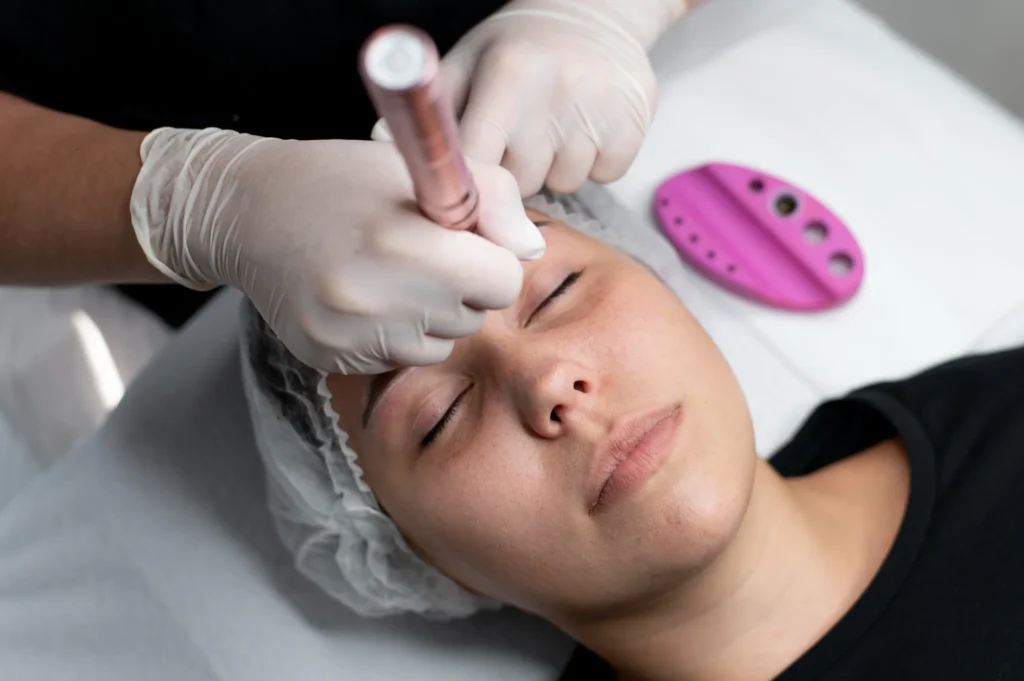
Ablative laser treatments, like fractional CO2 laser, work by removing and resurfacing the outer skin layer, generally producing significant improvement but with more noticeable downtime and recovery compared to radiofrequency microneedling. Radiofrequency microneedling, meanwhile, delivers energy beneath the skin’s surface with minimal disruption to the epidermis itself, generally resulting in a gentler recovery process. This is a detail worth keeping front of mind throughout any acne scar treatment decision.
A systematic review published via PMC (National Center for Biotechnology Information) found radiofrequency microneedling to be an effective standalone treatment for acne scarring, comparable in many cases to more aggressive laser approaches, though direct comparisons vary by specific study and scar type. It’s a consideration that comes up again and again in acne scar treatment conversations with patients.
How Do Chemical Peels Compare as an Acne Scar Treatment Option?
Chemical peels work by controlled chemical exfoliation of the skin’s surface layers, which can improve texture and mild scarring but is generally considered less effective for deeper, more established acne scarring compared to laser or radiofrequency-based approaches. Peels tend to be better suited to superficial texture concerns or as a complementary treatment alongside other approaches, rather than a standalone solution for significant scarring. You can learn more about our doctors and approach on the Anna Hoo Clinic website. Many patients considering acne scar treatment overlook this until it’s raised during consultation.
For patients with primarily superficial texture irregularities rather than deep, defined scars, a chemical peel may offer a gentler starting point before considering more intensive options. You can browse further reading on our Anna Hoo Clinic blog for additional context. This principle holds true whether you’re just starting to research acne scar treatment or already well informed.
Where Do Dermal Fillers Fit Into Acne Scar Treatment?
For certain types of depressed, rolling acne scars, dermal fillers can be used to physically fill and lift the depressed area, offering relatively immediate improvement compared to the gradual results typical of laser or radiofrequency treatments. This approach doesn’t address the underlying scar tissue the way collagen-stimulating treatments do, meaning results are typically temporary and require repeat treatment to maintain. It’s exactly this kind of detail that separates a well-informed acne scar treatment decision from a rushed one.
Fillers are sometimes used alongside other acne scar treatment approaches for a more comprehensive result, addressing both immediate volume and longer-term skin quality. This is one of the first things worth clarifying before pursuing acne scar treatment further.
How Do Doctors Decide Which Approach Is Right for a Specific Case?
The decision typically comes down to scar type, depth, and pattern, alongside your skin type, tolerance for downtime, and budget considerations. Deep, well-defined rolling scars might respond particularly well to a combination of filler and collagen-stimulating treatment, while broader textural irregularities might respond better to radiofrequency microneedling or a series of gentler peels. Getting this right early makes the rest of the acne scar treatment process noticeably smoother.
A proper assessment of your specific scarring pattern is essential before committing to any single approach, since no single technology is universally superior across every scar type. It’s a small point, but one that consistently shapes how a acne scar treatment experience turns out.
Can These Non-Surgical Approaches Be Combined?
Many doctors recommend combining different non-surgical acne scar treatment approaches for more comprehensive results than any single technology achieves alone, sequencing treatments strategically over time. For example, radiofrequency microneedling might be combined with periodic filler touch-ups for scars that would benefit from both collagen stimulation and immediate volume correction. For further clinical detail, PMC (National Center for Biotechnology Information) offers additional peer-reviewed research on this topic. This is exactly the kind of factor that experienced doctors consider when discussing acne scar treatment.
This combination approach requires careful planning from an experienced doctor to sequence treatments safely and effectively, rather than something to attempt without professional guidance. It’s worth revisiting this whenever your acne scar treatment plan reaches a new stage.
Frequently Asked Questions
Is laser always the most effective acne scar treatment option?
Not necessarily. Effectiveness depends heavily on your specific scar type, and radiofrequency microneedling or other approaches may be equally or more suitable in certain cases.
Which non-surgical acne scar treatment has the shortest downtime?
Radiofrequency microneedling generally involves less downtime than ablative laser treatments, though this varies by treatment intensity and individual healing.
Can chemical peels alone fix deep acne scars?
Chemical peels are generally better suited to superficial texture concerns rather than deep, established scarring, which often responds better to laser or radiofrequency-based approaches.
How long do results from dermal fillers for acne scars last?
Filler results for acne scarring are typically temporary and require repeat treatment to maintain, unlike collagen-stimulating treatments that aim for more lasting change.
Should I expect to need a combination of treatments for my acne scars?
Many patients benefit from combining approaches, though this depends entirely on your specific scarring pattern, which your doctor can assess during consultation.
Conclusion
Laser is one strong option among several non-surgical approaches to acne scar treatment, each with distinct strengths depending on your specific scar type, downtime tolerance, and goals. The right choice, or combination of choices, comes down to a proper assessment rather than defaulting to whichever technology is most talked about.
Curious which non-surgical approach suits your specific scarring? Book a consultation with Anna Hoo Clinic today.